In today’s digital environment, protecting sensitive information has become an important part of managing data securely. Files stored on computers, storage drives, and other devices can contain confidential information that should not be recoverable after deletion. This is where secure data-erasure practices become relevant.
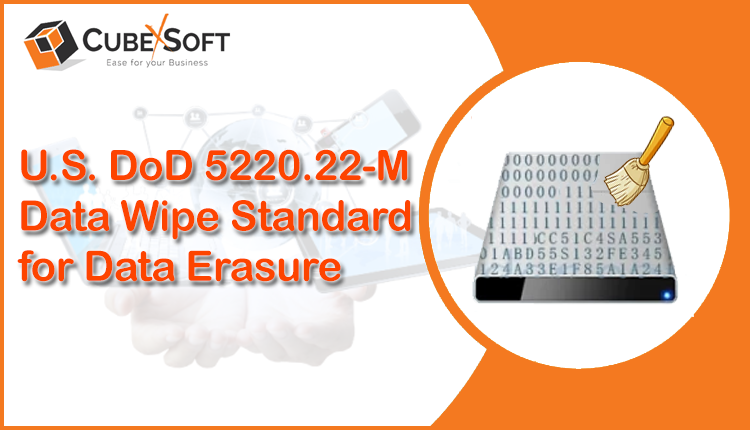
The DoD 5220.22-M standard is widely associated with secure data wiping and has been referenced as a method for removing information from storage media. Originally developed for handling sensitive government and military information in the United States, the standard has also gained attention among businesses and other organizations looking for structured approaches to data destruction. In this blog, we will explore what the DoD 5220.22-M method involves, how it works, and why it has been used for secure data removal.
Understanding the DoD 5220.22-M Data Wiping Method
The DoD 5220.22-M designation is commonly associated with a multi-pass approach to securely removing information from magnetic storage media. Rather than simply deleting a file, the method involves overwriting the existing data so that recovering the original information becomes significantly more difficult.
The approach became well known because of its association with the U.S. Department of Defense’s National Industrial Security Program Operating Manual (NISPOM). It was primarily intended for handling and protecting sensitive information within applicable government and contractor environments. Over time, software vendors and organizations outside the government sector also began referring to DoD-style overwriting when discussing secure file or drive erasure.
It is important to note that DoD 5220.22-M should not automatically be treated as a universal requirement for modern data sanitization. Current sanitization practices can vary according to the storage technology, security requirements, and applicable organizational policies.
Why Secure Data Erasure Matters?
Simply deleting a file or formatting a drive does not necessarily remove the underlying information. Depending on the storage technology and the deletion method, remnants of previously stored data may remain accessible until they are properly sanitized.
A structured wiping process can reduce the possibility of recovering sensitive information from a device that is being reused, retired, transferred, or discarded. This can be particularly important for organizations handling confidential business records, customer information, financial documents, employee data, or other sensitive material.
The DoD-style multi-pass approach gained popularity because it repeatedly overwrites storage areas rather than relying on a single deletion operation. However, the appropriate sanitization technique depends on the type of storage device. Methods suitable for traditional magnetic hard drives may not provide the same results on modern SSDs or other flash-based media.
For this reason, organizations should select a data-erasure procedure based on the device technology, the sensitivity of the information, and their applicable security or compliance requirements.
How Does the DoD 5220.22-M Wiping Method Work?
The DoD 5220.22-M approach is commonly described as a three-pass overwrite process for sanitizing data on magnetic storage devices. Instead of relying on a standard delete command, the method repeatedly replaces information stored on the drive.
The process is generally explained as follows:
- First Pass: The available data area is overwritten with a pattern of binary zeros.
- Second Pass: The same area is overwritten again using binary ones.
- Third Pass: A final pass writes a predetermined or random data pattern over the previous information.
After the overwrite operations, a verification step may be performed to check whether the intended data areas were successfully processed. The purpose of repeated overwriting is to make the original information substantially harder to recover from the sanitized storage media.
Is DoD 5220.22-M Still Used Today?
The DoD 5220.22-M method remains widely mentioned in data-erasure software and security discussions, but it should not be treated as the current universal U.S. government standard for media sanitization.
The traditional overwrite approach was primarily associated with magnetic hard disk drives (HDDs). Modern storage technologies, particularly SSDs and flash-based devices, work differently and may require other sanitization techniques.
For current guidance, organizations commonly refer to NIST SP 800-88, Guidelines for Media Sanitization, which provides a broader framework for selecting an appropriate sanitization method based on factors such as the type of media, sensitivity of the information, and intended disposition of the device.
Therefore, organizations should avoid automatically applying a traditional three-pass overwrite to every storage device. Instead, the sanitization method should be selected according to the storage technology and applicable security requirements.
Useful Resources
For authoritative information about current media-sanitization practices and U.S. government security requirements, consult:
- Defense Counterintelligence and Security Agency (DCSA): Information related to the National Industrial Security Program (NISP).
- NIST Computer Security Resource Center (CSRC): Guidance and publications covering cybersecurity and media sanitization.
Benefits and Practical Use of the DoD 5220.22-M Approach
The DoD 5220.22-M method became well known as a structured approach to overwriting information on magnetic storage devices. Its repeated-write process was intended to make previously stored data difficult to recover, which made the approach particularly attractive when organizations needed to dispose of or repurpose drives containing sensitive information.
However, it is important to distinguish between a data-wiping technique and a legal or regulatory requirement. Using DoD-style overwriting does not automatically make an organization compliant with regulations such as GDPR, CCPA, or HIPAA. Compliance depends on the specific requirements applicable to the organization and the way data is handled throughout its lifecycle.
Why Is Secure Drive Erasure Important for Businesses?
Organizations regularly retire, replace, reuse, or dispose of storage devices. Simply deleting files may not be sufficient when those devices contain confidential information. A proper sanitization process can reduce the possibility of sensitive data being recovered from equipment that leaves an organization’s control.
Secure erasure can be particularly relevant for businesses that handle customer records, financial information, employee details, legal documents, or other confidential material. A documented sanitization process can also support an organization’s broader information-security and media-disposal policies.
Data Wipe Software can provide automated options for overwriting supported storage media. The appropriate tool and wiping technique should always be selected according to the storage technology and the organization’s security requirements.
Other Approaches to Media Sanitization
DoD 5220.22-M is not the only method associated with secure data removal. Organizations may also encounter standards and guidance such as:
- NIST SP 800-88: Provides current guidance for media sanitization and considers different approaches based on the type of storage media and the sensitivity of the information.
- HMG Infosec Standard No. 5: A UK government standard historically associated with secure information erasure.
Modern organizations should evaluate these approaches against their current security policies and applicable requirements rather than choosing a wiping method solely because it carries a familiar name.
Limitations of Traditional DoD-Style Overwriting
The traditional multi-pass overwrite approach was developed around the characteristics of magnetic storage. Modern storage devices do not all behave in the same way, so applying the same overwrite procedure to every type of media may not produce the desired sanitization result.
For example, SSDs and other flash-based devices use technologies such as wear leveling and internal block management. Because the operating system may not directly control where every physical copy of data is stored, repeatedly overwriting logical locations does not necessarily guarantee that all previous physical data has been sanitized.
For this reason, modern sanitization guidance recommends selecting a technique appropriate to the specific media. Depending on the device and security requirements, options may include dedicated device-level sanitization commands, cryptographic erase, or physical destruction.
When Should You Consider This Method?
DoD-style overwriting may still be encountered when discussing the sanitization of compatible magnetic hard drives, particularly in environments where an organization’s internal policy specifically calls for such a procedure.
For routine deletion of non-sensitive personal files, however, a multi-pass DoD-style process may be unnecessary. The appropriate method should depend on the sensitivity of the information, the type of storage device, whether the device will be reused or discarded, and the applicable organizational or regulatory requirements.
Frequently Asked Questions
Q1. What are the three passes traditionally associated with DoD 5220.22-M?
The method is commonly described as a three-pass overwrite procedure for magnetic media:
- First pass: Write a pattern of binary zeros.
- Second pass: Write a pattern of binary ones.
- Third pass: Write a specified or random data pattern, followed by verification in commonly described implementations.
The exact implementation can vary between software products, so users should check the documentation of the particular tool being used.
Q2. Is DoD 5220.22-M recommended for SSDs?
Generally, a traditional multi-pass overwrite should not be treated as the preferred sanitization method for SSDs. Flash storage uses internal controllers and wear-leveling mechanisms that make physical overwriting different from overwriting sectors on a conventional HDD.
For SSDs, follow current media-sanitization guidance and use a method designed for the specific device and its security requirements.
Q3. Does using DoD 5220.22-M guarantee regulatory compliance?
No. A wiping method by itself does not guarantee compliance with GDPR, HIPAA, CCPA, or another privacy regulation. Organizations must follow the requirements that apply to their particular data, industry, location, and processing activities.
Q4. Is DoD 5220.22-M still relevant today?
The name remains widely used in data-erasure products and discussions, but it should not be considered the universal modern standard for every storage device. For current media-sanitization decisions, organizations should consult applicable guidance such as NIST SP 800-88 and select a technique based on the media type and security requirements.