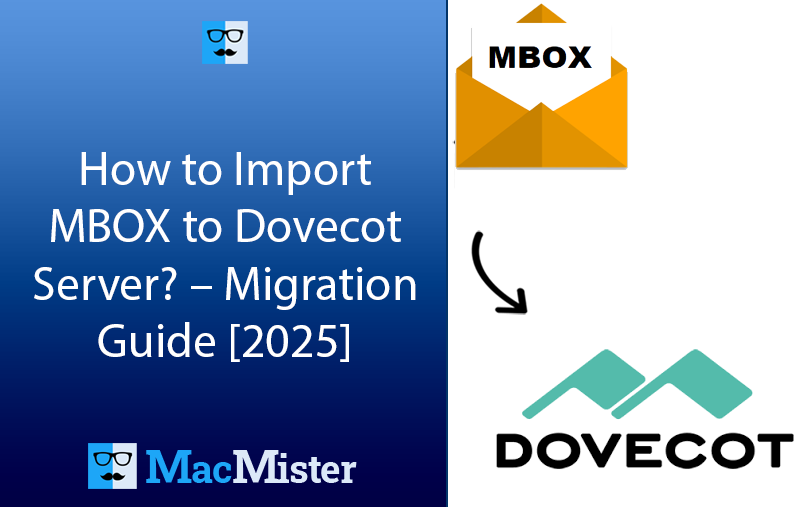
Migrating MBOX data to a Dovecot server can often become challenging, especially when emails or attachments fail to transfer correctly during the process. Since Dovecot operates as an IMAP/POP3 mail server, it does not directly support mailbox files created by email clients like Thunderbird or Apple Mail, which store data in MBOX format. This creates a compatibility gap that can lead to incomplete or inaccessible email data if not handled properly.
To ensure a smooth transition, it is important to follow the correct migration approach that maintains data integrity, including messages, attachments, and folder structure. This guide explores both manual techniques and a professional MBOX Converter solution designed to simplify the process. By using the right method, users can efficiently import MBOX files into a Dovecot server without data loss, ensuring reliable and uninterrupted email access for business or personal use.
Why There Is a Need to Import MBOX into a Dovecot Server?
Several practical and technical reasons drive users and organizations to migrate MBOX data into a Dovecot mail server environment. Since Dovecot is widely used for centralized email management, it becomes a preferred choice for businesses seeking better control and accessibility over their mailbox data.
- Centralized Email Management: Dovecot is known for its strong support for IMAP and POP3 protocols, allowing users to manage emails from a single server. This centralized approach simplifies email administration and improves accessibility across multiple devices.
- Handling Large Email Volumes Efficiently: For organizations dealing with heavy email traffic or multiple user mailboxes, Dovecot provides a scalable and stable environment. It is capable of efficiently managing large datasets without compromising performance.
- Cross-Device Email Accessibility: With IMAP/POP3 support, users can access their emails from different email clients such as Microsoft Outlook or Mozilla Thunderbird. This ensures flexibility and uninterrupted communication across systems.
- Improved Security and Data Control: Dovecot offers enhanced security mechanisms that help protect stored emails and restrict unauthorized access. This makes it suitable for business environments where data protection is a priority.
Methods to Transfer MBOX Data into Dovecot Server
There are two primary approaches to migrating MBOX files into a Dovecot server: manual configuration-based methods and automated software-based solutions.
Manual Method for MBOX to Dovecot Migration
The manual approach involves configuring the Dovecot server and transferring mailbox data through system-level operations. While it is cost-free, it requires technical expertise and careful execution.
Method 1: Using Local Directory Transfer
- Identify the Dovecot mail directory using configuration files (commonly found via mail_location in Dovecot settings).
- Stop the Dovecot service to prevent conflicts:
- sudo systemctl stop dovecot
- Copy the MBOX file into the appropriate mailbox directory:
- sudo cp /home/admin/backup/inbox.mbox /var/mail/username
- Assign proper ownership and permissions:
- sudo chown username:mail /var/mail/username
- sudo chmod 600 /var/mail/username
- Restart the Dovecot service:
- sudo systemctl start dovecot
- Rebuild mailbox indexes:
- doveadm index -u user@domain.com INBOX
Note: This method carries a risk of overwriting existing mailbox data if not handled carefully.
Method 2: Using Thunderbird as an Intermediate Tool
- Open Mozilla Thunderbird.
- Configure your Dovecot account using IMAP settings.
- Install the ImportExportTools NG add-on.
- Right-click the desired folder in Thunderbird.
- Select the import option for MBOX files.
- Choose and upload the required MBOX file.
- Drag and drop emails if needed to complete synchronization.
Once completed, the emails will sync with the Dovecot server.
Limitations of Manual Migration Methods
Although manual techniques are available, they come with several challenges:
- High risk of accidental data loss or corruption
- No efficient support for bulk migration
- Requires advanced technical knowledge
- Service downtime during migration may interrupt email flow
- Time-consuming and repetitive process
- Possible duplication of email data during transfer
Automated Solution for MBOX to Dovecot Migration
To overcome the limitations of manual methods, users often prefer a professional tool such as the MacMister MBOX Converter for Mac. This utility is designed to simplify mailbox migration by converting MBOX files into formats compatible with Dovecot, such as EML, and enabling direct import through IMAP configuration.
The tool supports batch conversion, preserves attachments, and maintains original folder structure and email metadata throughout the process. It is suitable for both individual users and enterprise-level deployments due to its simplicity and reliability.
How the Automated Tool Works
- Install and launch the MBOX to IMAP Converter application.
- Add single or multiple MBOX files into the software.
- Preview mailbox contents including attachments.
- Select IMAP as the destination format.
- Enter Dovecot server credentials.
- Apply filters if required.
- Click Convert to begin migration.
After completion, emails are directly transferred into the configured Dovecot mailbox.
Key Features of the Conversion Tool
- Supports bulk MBOX conversion in a single operation
- Preserves email formatting, metadata, and attachments
- Maintains original folder hierarchy
- Allows selective migration with filters
- Prevents duplicate email entries
- User-friendly interface suitable for all skill levels
- Compatible with Windows and Mac operating systems
- Free demo version available for limited email conversion testing
Final Thoughts
Migrating MBOX files to a Dovecot server is an important task for users who want centralized, secure, and scalable email management. While manual methods can be used, they require technical expertise and carry risks of data inconsistency or loss. Automated solutions provide a more efficient, reliable, and time-saving alternative, especially for bulk email migration scenarios.